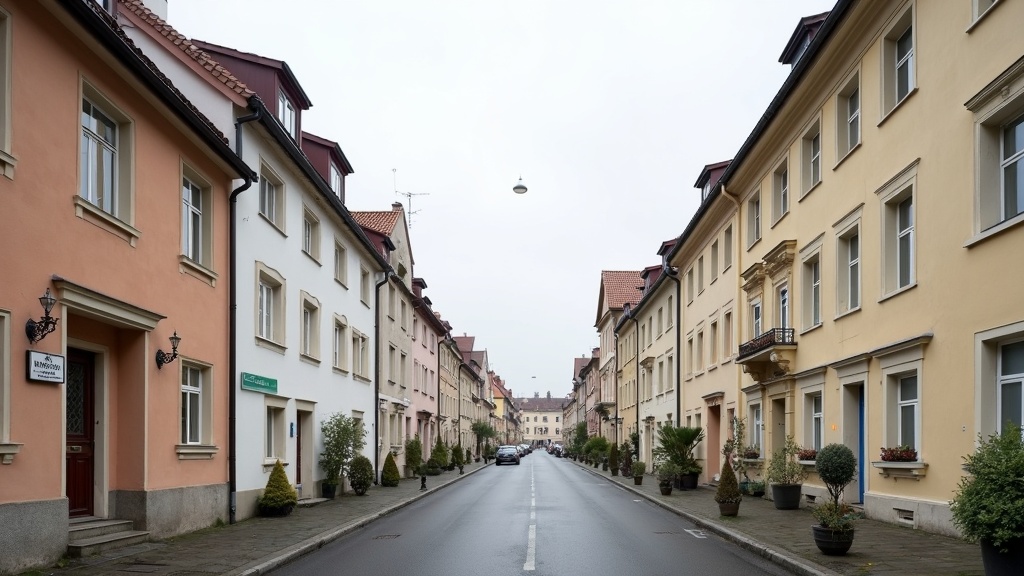
Buying property in Germany works through a notary-led process: a written purchase contract is signed in front of a notary, who then arranges the entries at the local land registry, and ownership only transfers once those registry steps are complete. There is no gazumping in the usual sense because the contract itself is the binding step, but that also means you must do your checking before you sign, not after. Costs and some procedural details vary by German state (Bundesland), so the exact figures always need confirming locally rather than assumed from a guide.
This article covers the general shape of a purchase in Germany. It does not tell you what to do in your own situation — that depends on your residency status, your financing, and the specific property, and those are questions for the professionals actually handling your file.
Who is normally involved
A German purchase usually brings together an estate agent (if one was used to find the property), the seller, the buyer, a notary, and often a bank if financing is involved. Unlike in some other European countries, the German notary is a neutral public official, not a representative acting for either side. That neutrality is a strength of the system, but it also means the notary is not there to negotiate on your behalf or flag every commercial risk in the deal. Many buyers, particularly those buying from abroad, choose to bring in their own independent lawyer as well, precisely because the notary’s role is procedural rather than advisory in the way a lawyer’s is. The reasoning behind why you need your own lawyer buying abroad applies in Germany just as it does elsewhere, even though the local system is structured differently from, say, the French or Spanish models.

Finding the property and making an offer
Once a property is identified, an offer is typically made informally, sometimes through the agent, sometimes directly with the seller. There is no standard preliminary contract stage of the kind found in some other countries — the first legally binding document in a German sale is usually the notarised purchase contract itself (the Kaufvertrag). This is a structural difference worth understanding before you start comparing Germany to a purchase process you may have read about for another country, since the general shape of buying property in Europe still varies significantly by jurisdiction.
Due diligence before signing
Because the contract signed at the notary is binding, checks are normally done before that appointment rather than during a cooling-off period afterwards. These typically include confirming who legally owns the property and what is registered against it, reviewing any existing mortgages or charges, checking planning and building records, and, for older buildings, arranging a structural survey. Title and registry checks are handled through the Grundbuch, the German land registry, and understanding how title checks and land registries work in a European context is a useful starting point before assuming German records mirror your home country’s system.
Financing arrangements
If a mortgage is needed, it is usually arranged and at least provisionally approved before the notary appointment, since the contract will commit you to the purchase. Non-resident buyers commonly face different terms, conditions or documentation requirements than residents, and getting a mortgage in Europe as a non-resident is worth reading about generally before approaching German lenders specifically, since lending criteria and paperwork can differ by bank and by the applicant’s residency and income situation.
The notary appointment
The purchase contract is read aloud in full at the notary’s office, in German, and both parties confirm they understand and agree to its terms before signing. If you do not speak German fluently, a professional interpreter is typically involved, and it is worth asking in advance how that is arranged and whether it satisfies the notary’s own requirements. If you cannot attend in person, a power of attorney can sometimes be used so that someone else signs on your behalf, though the rules around how that works and what it needs to cover are specific enough that they deserve their own attention.
After signing, the notary submits an application to the land registry for a priority notice (Auflassungsvormerkung), which protects the buyer’s position while the full transfer is processed. This is a distinctly German mechanism and one of the reasons the notary’s coordinating role matters so much in this system — what a notary does when buying property in Europe differs meaningfully from country to country, and Germany’s version gives the buyer real protection at this intermediate stage.
Completion and registration
Full legal ownership transfers only once the notary has confirmed that outstanding conditions are met — typically payment of the purchase price, any land transfer tax, and clearance of prior charges — and the buyer is entered in the land registry as owner. This can take weeks to a few months after signing, depending on the local land registry’s workload and how quickly conditions are satisfied. Buyers sometimes assume signing the contract equals owning the property; in Germany it does not, and the registry entry is the step that actually matters for legal ownership.
Costs to expect, and why figures are not given here
A German purchase involves several cost categories beyond the price itself: land transfer tax, notary fees, land registry fees, and often an estate agent commission depending on local custom and who the agent was engaged by. Land transfer tax rates are set at Bundesland level, meaning the same purchase can cost differently depending on which German state the property sits in, and rates are reviewed periodically. Because of this, no figure is reliable enough to print in a general article — the current rate for the relevant state should be confirmed directly with the tax authority or a professional adviser before budgeting. The general shape of who typically pays what in a European property transfer, and the categories of cost that buyers are commonly surprised by, are worth reading in general before assuming Germany matches another country you may be comparing it to.
Residency, visas and property ownership
Buying a property in Germany does not by itself grant a right to live there — residence and property ownership are handled as separate legal matters under German immigration rules, and this is true across most of Europe, not just Germany. Anyone considering a German purchase alongside a move should treat residency requirements as a distinct question, check the current rules directly with the relevant German authority, and not assume that owning a home changes their immigration status. Rules in this area change periodically, and the official government source is the only reliable place to confirm what currently applies.
After completion
Once registered as owner, ongoing matters include property tax obligations, utility contracts, building insurance, and, if the property is not your main home, considerations around letting it out or maintaining it while living elsewhere. These are covered in more depth in the site’s broader buying guide, which brings together the country-by-country and topic-by-topic pieces relevant at each stage of a purchase.
Frequently asked questions about buying property in Germany
Do I need a lawyer to buy property in Germany?
A lawyer is not legally required because the notary handles the formal contract process, but the notary is neutral and does not act for either side. Many buyers, especially non-residents, engage an independent lawyer for negotiation support and closer scrutiny of the specific deal.
How long does buying a house in Germany take?
Timelines vary widely depending on financing, due diligence, and how quickly the land registry processes the transfer. It commonly runs from a few weeks for a straightforward cash purchase to several months where mortgage approval, surveys or registry backlogs are involved.
Can foreigners buy property in Germany?
Yes, there is generally no nationality restriction on owning property in Germany, though financing terms, tax treatment and documentation requirements can differ for non-residents compared with residents. These specifics should be confirmed with a bank or adviser before committing.
Does buying property in Germany give you residency?
No, ownership and residency are handled under separate legal frameworks in Germany. A property purchase does not itself create a right to reside, and anyone planning to move should check current immigration rules directly with the relevant German authority.
How much is property transfer tax in Germany?
Transfer tax rates are set at the state (Bundesland) level and reviewed periodically, so no single figure applies nationally. The current rate for the specific state involved should be confirmed with the relevant tax authority or a qualified adviser before budgeting for a purchase.
Europe Realtor publishes general information about European property, not legal, tax, financial or immigration advice. We are writers and editors, not estate agents, lawyers, notaries or tax advisers. Rules differ by country and often by region, and they change. Before committing money, engage an independent lawyer in the relevant country who is not connected to the seller or the agent, and confirm your tax position with an adviser qualified in that jurisdiction.
Related reading
renting, residency, daily life and owning on, how buying works — process, costs, finance, by country, Buying Property in Greece: How the Process Works, Buying Property in Italy: How the Process Works.